
Platform 4: Clinical: Human Challenge – Small scale clinical trials
This platform provides single-point-access to an advanced clinical trials package that offers first-into-human testing across a full range of antimicrobial products and treatments – from hygiene and sanitation products, diagnostics, AI wearables and devices, to new therapeutics, and vaccines.
This platform provides a comprehensive clinical trials package that supports first-in-human testing for a wide range of antimicrobial products and treatments, including hygiene and sanitation products, diagnostics, AI wearables, devices, new therapeutics, and vaccines.
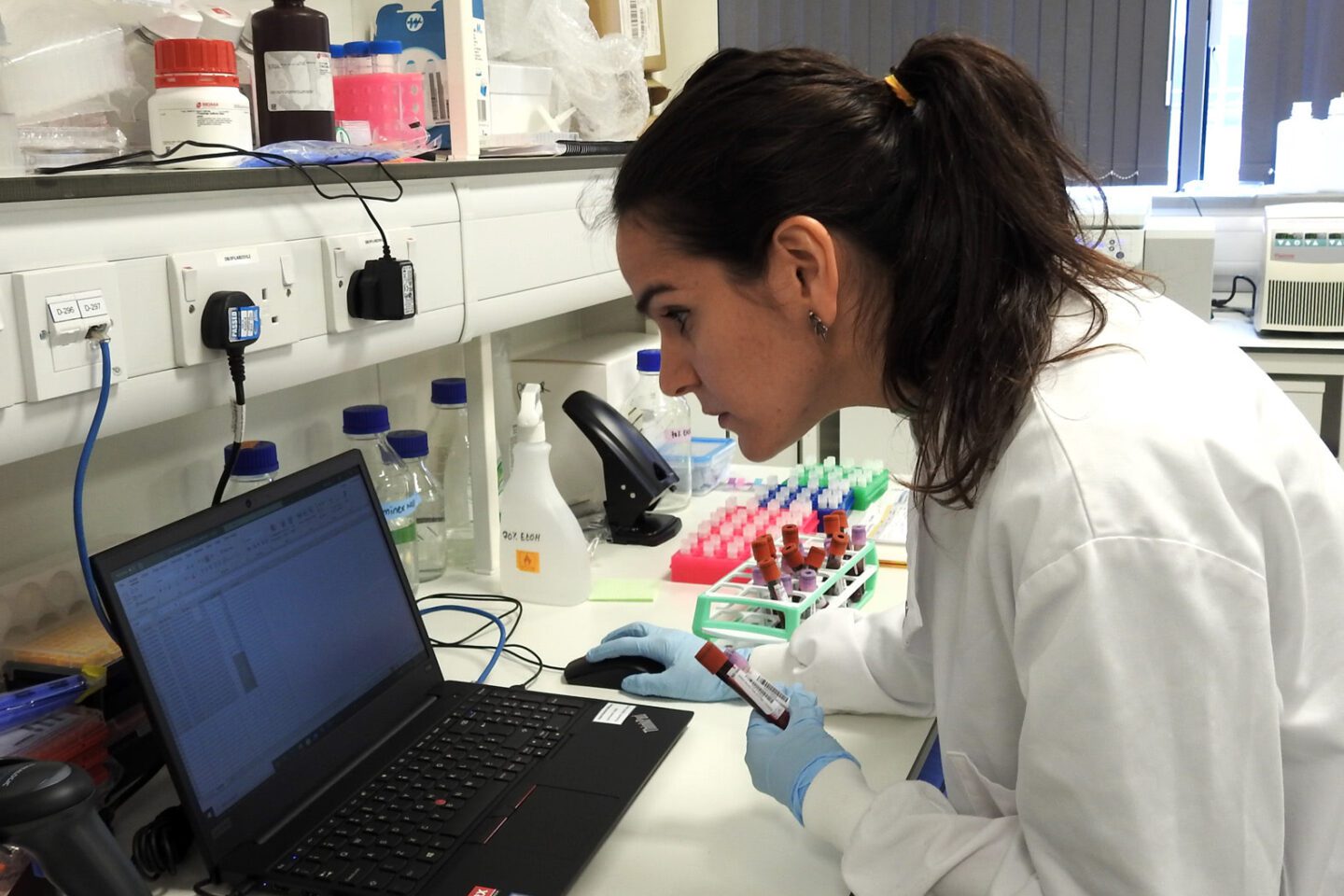
Clinical trials are led from a state-of-the-art facility with beds and adjacent laboratories based in Liverpool This ensures high clinical and research standards and enables rapid sample processing. The platform brings together the biomedical science commercial sector, the NHS and academia. Co-location with one of the UK’s largest NHS trusts and high containment laboratories make this a unique proposition for the critical expansion of first in man clinical trials.
Led by Liverpool School of Tropical Medicine and partners in Democratic Republic of Congo and Uganda, this platform also provides robust data to inform global health policy and support and enable market access, helping to protect communities from malaria. This work is already helping to protect communities and save lives by advancing innovative interventions. In many low- and middle-income country settings, vector control products often need to be on a WHO recommended list before donors will make large scale purchases. This requires at least two epidemiological impact randomised control trials, which are inevitably time-consuming and usually limited in geographical scale. Pathways to implement trials in a more streamlined manner, which can improve the evidence base for newer products, could greatly assist the decision-making process for policy makers and procurers in order to expedite product roll out.
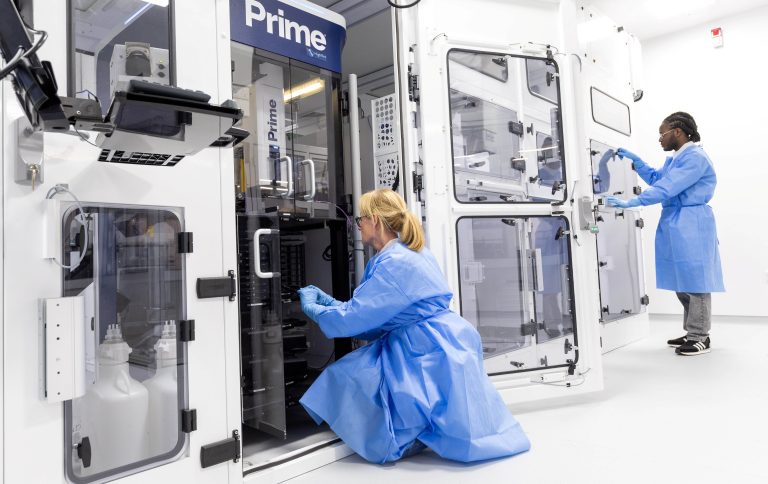
iiCON has recently launched the UK’s first high-security Containment Level 3 (CL3) laboratory fitted with state-of-the-art liquid handling systems, robotics, and AI enabling pioneering automated organoid research. The Liverpool Accelerate Laboratory (formerly Liverpool Robotic Infection Research Laboratory) provides industry and academic collaborators with the containment and research capabilities to safely tackle high-risk global infectious diseases and accelerate next-generation drug and vaccine discovery.
For more information or to learn how your business can engage with this platform.
Platform Lead

Professor Daniela Ferreira
Professor of Respiratory Infection and Vaccinology at Liverpool School of Tropical Medicine and the University of Oxford


Professor Daniela Ferreira
Professor of Respiratory Infection and Vaccinology at Liverpool School of Tropical Medicine and the University of Oxford
Daniela is a global leader in Respiratory Infections and Controlled Human Infection Models (CHIM) (link is external) with experience in bacterial challenge, co-infection studies, vaccine testing and immune responses. She leads a large programme of work on Experimental Human Pneumococcal Challenge and mucosal immunity with collaborators from over 50 laboratories worldwide including South America and Africa and over £20m from various funders including MRC, UKRI, NIHR and top global industry partners.
She is the Head of the Liverpool Vaccine Team based at the Liverpool School of Tropical Medicine. To date her Liverpool based team has safely challenged over 1800 participants with live bacteria in over 20 clinical studies in their bespoke Accelerator Research Clinic. Daniela has played a substantial role in the UK Covid-19 pandemic response including the leadership of the Liverpool’s STOP COVID response and the NIHR NWC Vaccine Alliance Liverpool. Her Liverpool based team was a trial site for several Covid vaccine studies including the Phase II/III of the Oxford/AZ vaccine.
Daniela is on the management board of the HIC-VAC consortium. She obtained a PhD in Immunology in 2009 from the University of Sao Paulo (São Paulo, Brazil). During her PhD Daniela was awarded the prestigious Robert Austrian Research Award in Pneumococcal Vaccinology to develop novel nasal vaccines (2006). Daniela joined the Liverpool School of Tropical Medicine in 2009 as a postdoctoral scientist and was promoted to Professor and Head of Department of Clinical Sciences in 2018. She joined the University of Oxford in June 2022.


Dr David Weetman
Reader, Liverpool School of Tropical Medicine
Dr Weetman graduated in Zoology (BSc) from the University of Newcastle-upon-Tyne and in Ecology (MSc) from The University of Wales, Bangor. His PhD at The University of Liverpool was followed by postdoctoral positions in the Molecular Ecology and Fisheries Genetics Group at the University of Hull. He joined LSTM in 2006 working as a senior PDRA on IVCC and then NIAID-funded projects on the genetic basis of insecticide resistance in the primary malaria mosquito Anopheles gambiae. He was appointed as Reader in 2020.
His research aims primarily to investigate the genes and mutations responsible for insecticide resistance in mosquitoes and phlebotomine sandflies and how these spread among populations. A goal of this work is to identify and apply DNA markers for molecular surveillance of insecticide resistance in control programmes. A second area of research is in questions related to the causes and consequences of vector speciation and population subdivision and how these regulate transfer of adaptive traits of medical importance. He is also broadly interested in the application of molecular techniques to applied ecological questions in vector biology. He coordinates the Vector Research Support group (VRS), which provides molecular and biochemical collaboration, training and services to students, visiting scientists and for control trials.