iiCON boosts team with trio of new starters
The Infection Innovation Consortium: iiCON has welcomed three new starters – strengthening its multidisciplinary team as it works to accelerate infection R&D through the integration of new technologies.
The consortium, which is led by Liverpool School of Tropical Medicine, with partners Unilever, Medicines for Malaria Venture (MMV), Infex Therapeutics, LYVA Labs, Liverpool University Hospitals Group, Life Arc, University of Liverpool, and Evotec, brings together academia, industry, and the NHS to bridge innovation gaps and enable cutting-edge infection research and development.
Launched in 2020, iiCON recently launched its second phase supported by £6 million Local Innovation Partnerships Fund grant. This will include the development of a permanent, globally-facing Liverpool City Region R&D hub – focused on six pioneering R&D platforms to support industry innovation.
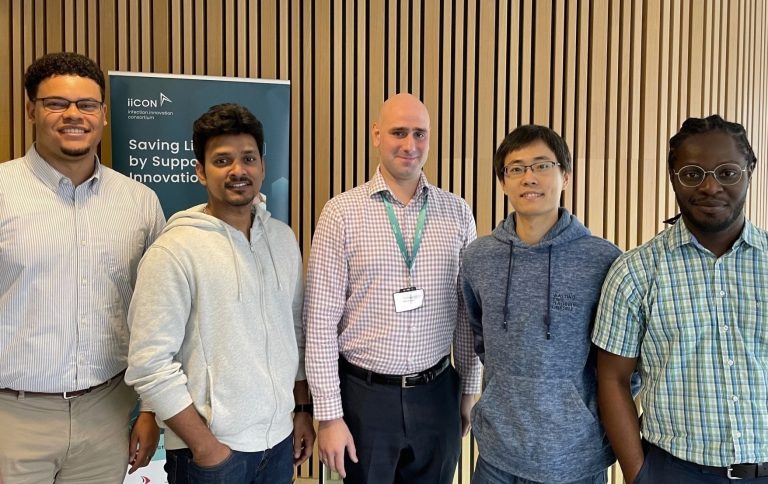
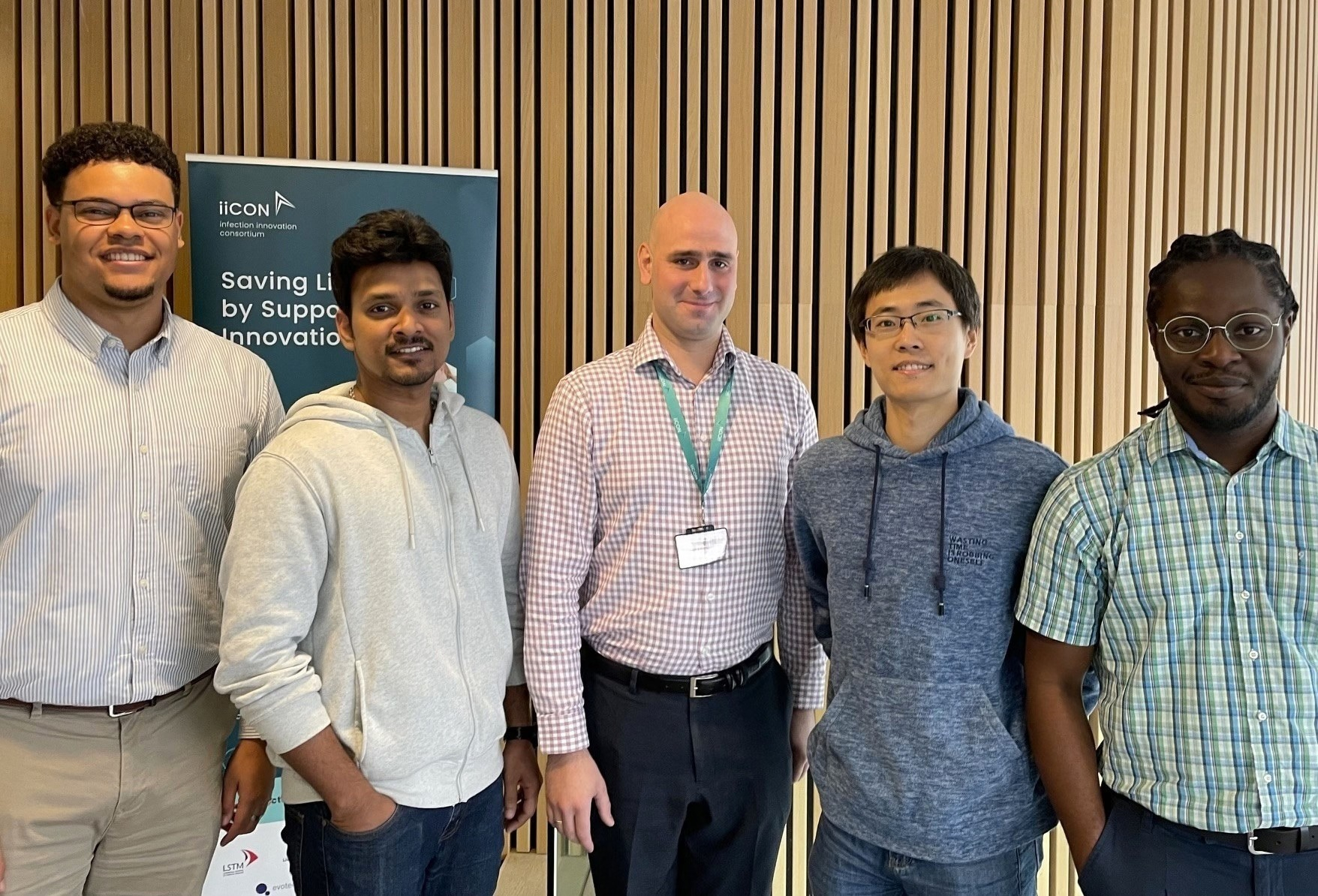
As the consortium continues to grow, it has brought on board three new team members; Dr Ravi Gudivada, Dr Shibo Jing and Dr Ekene Obianom. The trio are working across the R&D platforms linked to iiCON’s Infection Innovation Technology Laboratory (iiTECH), a pioneering facility that combines cutting-edge sensor technology with advanced AI analysis and machine learning.
The multi-disciplinary trio bring a range of expertise and experience across radio frequency technologies (RF), sensors, machine learning and AI, and electrical and electronic engineering. They report into iiCON’s Professor Patryk Kot, a globally recognised expert in sensor technology, who leads the Infection Innovation Technology Laboratory at iiCON.
RF and Microwave Design Engineer, Dr Ravi Gudivada is an RF and electromagnetics expert and researcher with experience in antenna design, RF systems, electromagnetic simulation, wireless sensing, and microwave technologies. His work brings together his established expertise in RF engineering and sensing with emerging healthcare applications, with a particular focus on developing and testing sensing technologies.
Before joining LSTM, Dr Gudivada held research positions at the University of Liverpool, and Loughborough University as a Postdoctoral Research Associate working on RF sensing, RFID, antenna array systems, and emerging wireless technologies. He has been recognised with a fully-funded research scholarship (2021) from the University of Liverpool, the young scientist award (2020) by the SPNS Technologies Ltd and Novel Patent Services India, and the young researcher award (2019) by ANITS India. He has filed 3 patents relating to RF technologies and is endorsed by the Royal Academy of Engineering (RAEng) under the UK Global Talent route.
Dr Shibo Jing is an Applied Machine Learning Engineer, his work covers applying machine learning to the detection, monitoring, and prevention of infectious diseases – with a particular focus on translational health technologies that bridge biomedical engineering, artificial intelligence, and diagnostic research. His current research includes developing signal-
processing and machine learning pipelines for wearable microwave sensing, as well as embedded diagnostic approaches for sensor-based health monitoring.
With a PhD in Biomedical Engineering from Imperial College London, Dr Jing has a strong scientific background in multimodal wearable sensing, real-time signal processing, predictive modelling, and embedded inference. His expertise spans the full research workflow, from experimental design and sensor-data acquisition to statistical signal processing, ML/DL-based predictive modelling, embedded deployment, and scientific communication.
Dr Ekenedirichukwu ‘Ekene’ Obianom is an Embedded Systems and Electronics Design Engineer. He completed a PhD in Biomedical Engineering at the University of Leicester, focusing on custom electronics and embedded machine learning applications. He brings over eight years of progressive experience across biomedical instrumentation, physiological signal analysis, wireless hardware integration, and embedded systems design, combining analytical precision with creative system design to develop scalable solutions for next-generation medical technology.
Leveraging his knowledge in embedded machine learning and wireless connectivity (e.g., Bluetooth), Dr Obianom works alongside team specialists to integrate smart algorithms, digital electronics, microcontrollers, and communication modules into cohesive systems for real-time analysis, detection, monitoring, and prevention of infectious diseases.
iiCON is also supporting a six-month internship placement, funded through the Medicines Research Council (MRC). Alex Robinson, a PhD candidate in Translational Biomedical Science at the University of Southampton, has joined the team working across programmes including the pan-European COST Action CA25101 programme and projects linked to technologies being developed within iiCON and partner organisations through the iiTECH Lab.
Professor Patryk Kot, head of the iiTECH lab at iiCON, said: “At iiTECH, we are working to integrate advanced technologies with innovative diagnostics to deliver pioneering solutions to some of the world’s most challenging health conditions.
“We’re very pleased to be expanding our team and deepening the range of expertise available through the specialist complementary skills and experience that Ravi, Ekene and Shibo bring. They are helping to shape next-generation technologies that are already delivering tangible real-world health impact. It’s also great to have Alex joining us for a six-month placement, where he will have the opportunity to work on projects including the Pan-European COST Action Network on infectious diseases.”
Professor Janet Hemingway, iiCON’s founding director said: “We’ve recently launched the second phase of the iiCON programme and continue to grow – so we’re very pleased to be welcoming Ravi, Ekene, Shibo and Alex to the team, where their multidisciplinary expertise will be a valued support to our collaborators.
“Leveraging next generation technology is vital to support the development of new treatments and diagnostic approaches that can deliver solutions to protect, monitor, and treat communities more quickly, affordably, and safely – so we’re delighted to be strengthening iiTECH’s capability and expertise in a range of advanced technologies through these appointments.”