iiTECH Case Study: IRS Sensor for Quality Assurance in India
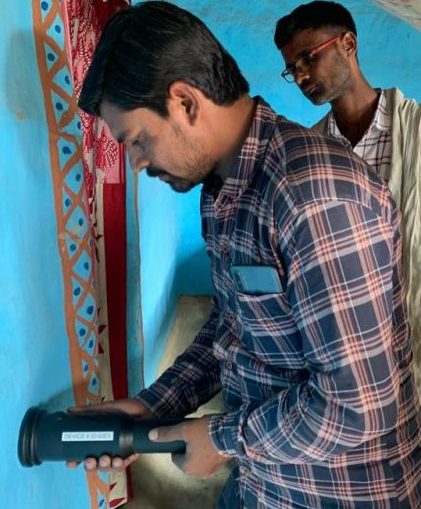
Microwave sensors are helping to protect communities in Africa and Asia by monitoring insecticide use
The iiTECH team is further developing an innovative portable handheld microwave sensor created in partnership with Liverpool John Moores University (LJMU), with projects developing and expanding across India, Nepal, and Africa.
As part of a collaboration with LJMU, Care-India, EDCD, and DPHO-Nepal funded by the Gates Foundation, this ground-breaking device is being developed to improve the coverage and efficacy of insecticide sprayed within homes in Southeast Asia, which is used to protect communities from sandflies which cause deadly ‘Black Fever’ or Visceral Leishmaniasis.
The sensor is designed to accurately monitor the concentration of alpha-cypermethrin on various wall surfaces. It has undergone rigorous validation for implementation in both India and Nepal – bringing forward a new device which has the potential to save lives in some of the region’s most vulnerable communities.
The operational process involves the application of dosed filter papers during standard spraying routines, followed by High-performance liquid chromatography (HPLC) analysis to calibrate and authenticate sensor readings.
The technology incorporates a straightforward LED system to signify inadequate spraying, accurate spraying, or excessive spraying, enabling comprehensive assessment of the spraying quality. The sensor development work and validation in India was funded by the Gates Foundation.
This ground-breaking technology is now being further developed for use in Africa as part of a Gates Foundation funded collaboration between iiTECH and LJMU. Working in collaboration with locally-based partners including IFAKARA Health Institute and AgaMal, the project aims to broaden the scope of the technology to monitor the optimum application of various insecticides used to protect communities in homes across Ghana and Tanzania.