Celebrating World Immunization Week
New frontiers in vaccine development
Innovation in vaccine development is one of the most powerful ways to drive forward health improvements that will benefit current and future generations.
This World Immunization Week, we explore two very different iiCON programmes that are creating a step-change in how vaccines are designed and developed.
A UK/Canadian collaboration is creating a new blueprint for speed, scalability, and precision in vaccine development. While a UK/Malawian collaboration is helping to address the global pneumococcal burden and creating a model that supports low-income countries to play a key role in developing their own locally responsive vaccines.
Creating a blueprint for next-generation vaccine development
Advanced automated organoid modelling utilising AI and machine learning is helping to bring forward novel vaccine technology – creating a new development pathway for next-generation vaccines.
iiDiagnostics (iiDX), a company formed by iiCON, has launched a collaboration with the Canadian biotech, Eyam Health, to bring forward Eyam’s novel vaccine technology as part of a pioneering UK/Canada collaboration.
This £750,000 international initiative funded by National Research Council of Canada Industrial Research Assistance Program and Innovate UK will combine Eyam’s advanced vaccine design and delivery platforms with world-leading automated organoid technology from iiCON’s lead partner, Liverpool School of Tropical Medicine (LSTM), to accelerate the R&D and testing of vaccines against infectious diseases.
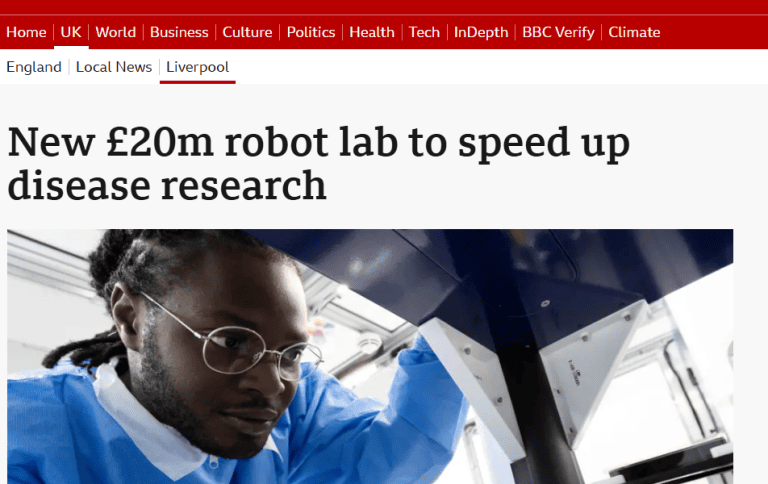
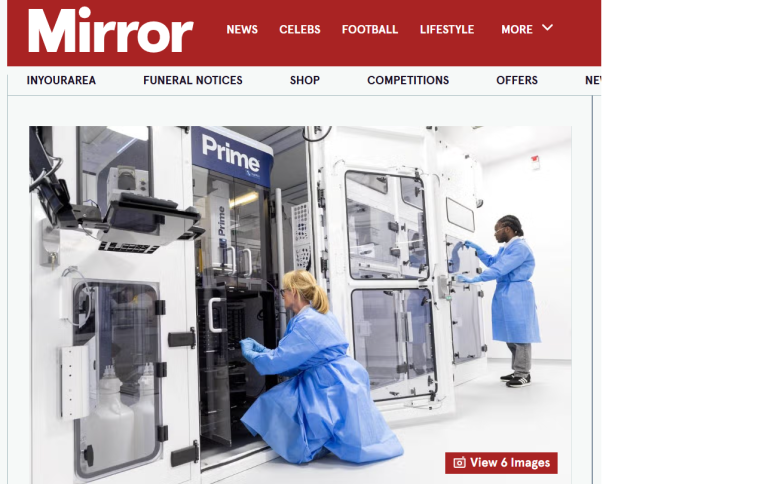
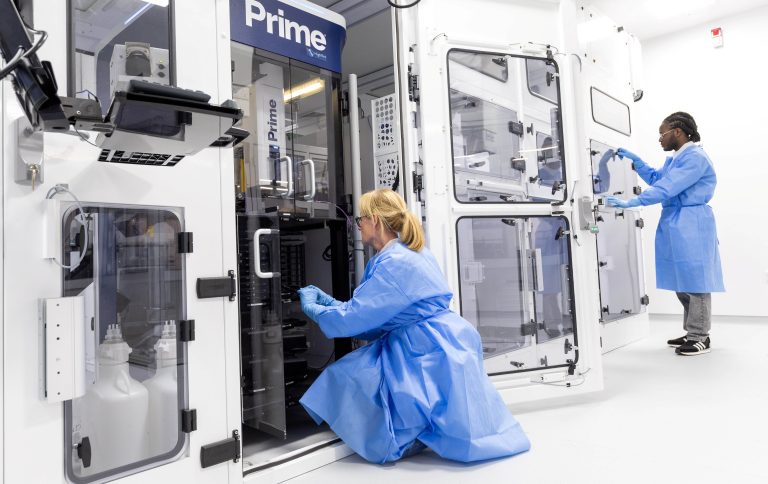
The project will be the first commercial project to be carried out in the state-of-the-art Liverpool Robotic Infection Research Laboratory being delivered by iiCON and LSTM.
A New Model for AI-Driven, Human-Relevant Vaccine Testing
At the core of this collaboration is the co-development of a physiologically relevant, automated tonsillar organoid model—the first of its kind—designed to enable rapid, high-fidelity testing of Eyam’s saDNA-based vaccine candidates.
This cross-border collaboration aims not only to generate translational data for Eyam’s platform, but also to prototype new industry access models for the Liverpool Robotic Infection Research Laboratory. Learnings from Eyam’s engagement will be used to inform iiCON’s long-term commercialisation strategy around automated human organoid systems for pharma and biotech partners.
Professor Janet Hemingway, iiCON founding director, said: “This project will not only advance next-generation vaccine candidates, but will support the development of a commercially viable service offerings for the broader biotech sector—bolstering leading-edge infection innovation and making a key contribution to UK and Canadian pandemic preparedness.”
Ryan Thomas, CEO of Eyam Health, said: “Together with iiDiagnostics and LSTM, we are designing a new blueprint for speed, scalability, and precision in vaccine development—one that doesn’t rely on cold-chain, in vivo testing, or outdated delivery systems.”
Global Health Impact
With the ability to accelerate candidate screening while producing more predictive data than in vivo models, this collaboration represents a new frontier in vaccine development and pandemic preparedness. It also strengthens bilateral cooperation between UK and Canadian institutions, advancing both nations’ shared goals in biosecurity and global health resilience.
You can read more about this exciting collaboration here
Addressing the global pneumococcal burden
In Malawi, iiCON and partners recently reached a significant milestone in a landmark clinical trial to develop a novel vaccine for pneumococcal disease.
The trial is the first ever controlled human infection model (CHIM) programme to test a vaccine for efficacy against pneumococcus in Africa. It is part of a £3.2 million Medical Research Council (MRC) funded project being delivered by iiCON to bring forward a new vaccine, PnuBioVax, developed by UK SME ImmBio.
Invasive Pneumococcal disease has high rates of antibiotic resistance and is a leading global cause of deaths in children, with most deaths occurring in low- and middle-income countries (LMICs).
Streptococcus pneumoniae, the bacteria responsible for pneumococcal disease has nearly 100 different strains, including increasingly antimicrobial-resistant strains such as Serotype 3 pneumococcus (SPN3).
People living in Malawi face a particular threat from SPN3. This strain, which causes invasive disease, is increasingly prevalent and has high rates of antimicrobial resistance. It poses a significant public health concern to the community, particularly children and individuals with HIV. The SPN3 strain is also the most common cause of severe pneumonia in children in Europe.
However, the PnuBioVax vaccine targets proteins which are common across all pneumococcus serotypes, including SPN3, so there is strong hope that it could lead to a more holistic control response across many different strains of the disease.
Over 250 people have now been enrolled for the trial, which is being led by the Malawi Liverpool Wellcome Research Programme. The trial will enrol 416 people in total over the course of 2026 – making it the biggest human challenge trial conducted in the country to date.
Following the trial, the vaccine could have the potential to be taken forward at scale by an industry partner which could develop and deliver a low-cost vaccine at scale – with potential for manufacturing and distribution across Africa. iiCON and ImmBio are now working to identify potential commercial partners who may support the next stage of development following the successful completion of the trial.
Professor Stephen Gordon, Director of Experimental Medicine at iiCON, is leading the programme. He said: “It’s great to see the team at MLW making such strong strides in the delivery of this important trial, which will help us to assess the impact of this potentially game-changing vaccine, on a local population.
“This programme of activity is a great example of the collaborative global innovation that iiCON was designed to enable. We have had the opportunity to work alongside world-leading international partners to support a UK SME with a potential solution to a global health crisis, while addressing a key public health challenge in Malawi.
“This activity is also turning the dial for infectious disease capacity in Malawi; helping to deepen in-country capability and move us closer to a position where low-income countries are able to play a key role in developing and potentially even manufacturing their own locally responsive vaccines.”
You can read more about this landmark project here