- Find our latest Case Studies
- Our Platforms
Our Platforms
- Platform 1: Bioactives Library – Shaping novel antimicrobial products
- Platform 2: Hits to Leads – Developing new innovative antibiotics
- Platform 3: Organoid modelling – Enhancing drug discovery
- Platform 4: Advanced AMR Modelling
- Platform 5: Human Challenge – Small scale clinical trials
- Platform 6: Diagnostics
- Platform 7: Randomised Control Trials
- Platform 8: Mapping and Modelling
- Platform 9: Nanotherapeutics
- Platform 10: Antibody Humanisation
- Platform 11: Long-Acting Therapeutics

Empowering communities at the frontline of the battle with neglected tropical diseases
Professor Patryk Kot, Head of iiTECH
As we mark Neglected Tropical Diseases Day, we explore how next generation technology is offering new hope in the battle to combat deadly parasitic diseases which predominantly affect the world’s poorest and most vulnerable communities.
The Infection Innovation Technology Laboratory: iiTECH is working with communities facing the scourge of neglected tropical diseases, bringing forward new devices to enhance monitoring and diagnosis.
The pioneering centre, which was launched by the Infection Innovation Consortium iiCON in 2024, combines cutting-edge sensor technology with advanced AI analysis.
At iiTECH, we are leveraging next-generation sensor technology as a new weapon in the battle to monitor and combat these deadly neglected diseases – working on projects across Africa, Asia, and Europe to empower and support communities living with conditions including Visceral Leishmaniasis and Lymphatic Filariasis.
Empowering communities to accurately monitor insecticide use and protect against Visceral Leishmaniasis
Visceral Leishmaniasis ‘black fever’ is a deadly, vector-borne parasitic disease transmitted by sandfly bites, which attacks internal organs like the liver and spleen. It causes high fever, severe weight loss, anaemia, and is fatal in over 95% of untreated cases.
Efforts to combat the disease include Indoor residual spraying (IRS) programmes, where insecticide is sprayed on walls in houses to protect communities from the sandflies which transmit VL. IRS programmes have played a huge role in helping to combat the disease. India, Bangladesh and Nepal have taken enormous steps over the last decade to bring down the caseload experienced in Asia – through effective IRS programmes among other public health initiatives.
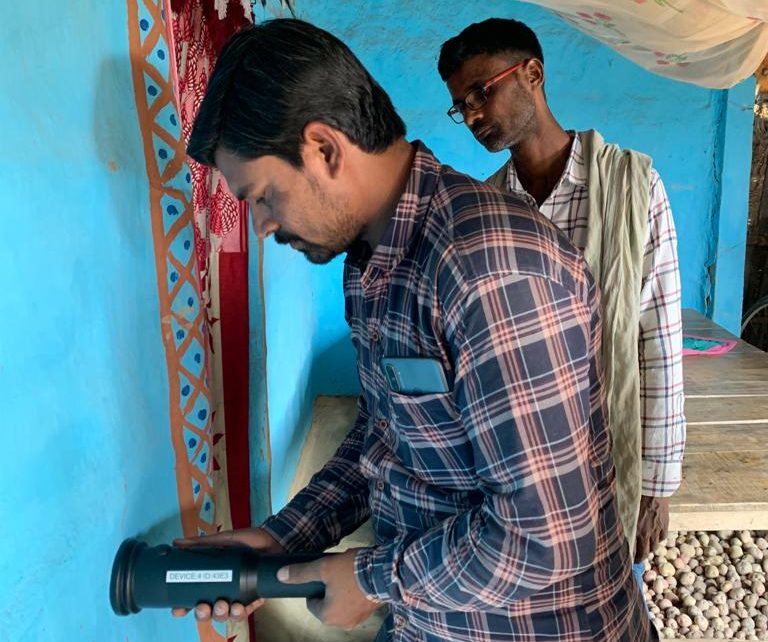
To strengthen these efforts, the iiTECH team is developing an innovative portable handheld microwave sensor to monitor the quality of indoor residual spraying in Southeast Asia. The sensor is designed to accurately monitor the concentration of alpha-cypermethrin on various wall surfaces – supporting the efforts of the ‘spray men’ who operate the spray pumps and helping to ensure optimum coverage to protect communities.
Developed in partnership with Liverpool John Moores University (LJMU), this groundbreaking device is being taken forward by iiTECH, with projects developing and expanding across South Asia and Africa as part of a collaboration with LJMU, Care-India, EDCD, and DPHO-Nepal funded by the Gates Foundation. It has now undergone rigorous validation for implementation in Asia – bringing forward a new device which has the potential to save lives in some of the region’s most vulnerable communities
The technology is being further developed for use in Africa as part of a Gates Foundation funded collaboration between iiTECH and LJMU. Working in collaboration with locally-based partners including IFAKARA Health Institute, AgaMal, Mozambique National Malaria Control Programme and Tchau Tchau Malaria (Goodbye Malaria), we will expand the range of insecticide formulations that the device can measure.
Lymphatic Filariasis sensor: enabling early detection of a life-changing hidden infection
The team is also developing a transdermal sensor to detect Lymphatic Filariasis. Over 657 million people in 39 countries worldwide are at risk of this parasitic infection, which causes significant human suffering, and require preventive chemotherapy to stop the spread.
Lymphatic filariasis blocks the lymphatic ducts and can lead to the abnormal enlargement of body parts, causing pain, severe disability and social stigma. Most infections are asymptomatic, showing no external signs of infection while contributing to the transmission of the parasite. These asymptomatic infections still cause damage to the lymphatic system and the kidneys and alter the body’s immune system, so early diagnosis is critical to prevent transmission.
An innovative transdermal sensor for the detection of lymphatic filariasis was developed as part of a collaborative project between iiTECH, LJMU, and AIIMS Patna India, funded by the Gates Foundation. The resulting prototype allows remote data acquisition and utilises machine learning for parasite detection, creating a more comfortable user experience and providing testing teams with more flexibility.
The team is now focusing on the miniaturisation of the wearable prototype and the implementation of larger-scale clinical studies to further advance and refine the technology, supported by subsequent research funding.
Although we are making significant progress in employing next-generation technology against these neglected diseases, which cause such significant human suffering in the world’s most vulnerable communities, we are still at the forefront of the journey to combat NTDs.
Factors such as climate change are impacting the spread of NTDs, widening their geographic range, and making the fight to combat diseases like VL even more urgent. These diseases, which often trap families and communities into cycles of poverty and misery, cause untold suffering. In the battle to combat NTDs, complacency is not an option and co-innovation is critical.
Technological evolution holds the potential to unlock novel treatments and diagnostic approaches – delivering new solutions to protect, monitor, and treat communities more quickly, affordably, and safely.
Working with our partners across the global community to explore and exploit the benefits that advances in sensors, AI, and automation can offer in the battle against NTDs is helping to create a step-change in how we engage with communities and empower them with new tools to combat long-standing public health challenges.