- Find our latest Case Studies
- Our Platforms
Our Platforms
- Platform 1: Bioactives Library – Shaping novel antimicrobial products
- Platform 2: Hits to Leads – Developing new innovative antibiotics
- Platform 3: Organoid modelling – Enhancing drug discovery
- Platform 4: Advanced AMR Modelling
- Platform 5: Human Challenge – Small scale clinical trials
- Platform 6: Diagnostics
- Platform 7: Randomised Control Trials
- Platform 8: Mapping and Modelling
- Platform 9: Nanotherapeutics
- Platform 10: Antibody Humanisation
- Platform 11: Long-Acting Therapeutics

Developing an innovative sputum-free diagnostic for TB: Tackling Infection Transmission case study
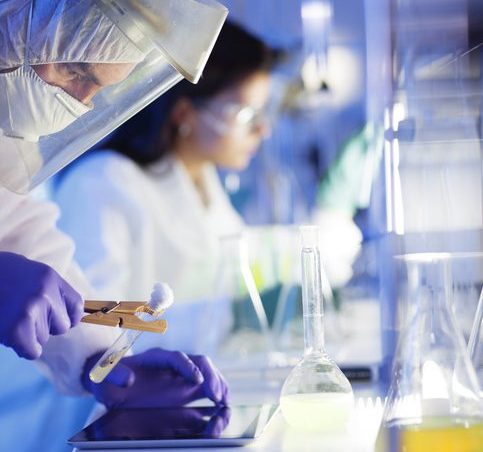
As part of a unique initiative funded by UK Research and Innovation (UKRI) and delivered by iiCON, companies and research groups with novel solutions to tackle infection transmission were offered the opportunity to shape the direction of the UK’s infection response and bid for funding.
After successful sandpit events, iiCON announced 11 new projects had received a share of £1.5 million in funding from UKRI as part of its ongoing work to support innovative ways of tackling infections.
Here, we explore how one of the successful projects led by Dr Ana Cubas Atienzar at Liverpool School of Tropical Medicine has been utilising the funding received to develop a prototype for an innovative sputum-free diagnostic test for TB – meeting a key global need.
The Challenge:
Tuberculosis (TB) remains a critical global health issue and is one of the leading causes of death worldwide.
Current diagnostic methods for TB rely on sputum tests, which pose several challenges, particularly for patients who cannot produce sputum or live in areas where testing facilities are not accessible. These issues are exacerbated in patients co-infected with HIV and in children, who are at higher risk of developing active TB but often cannot expectorate sputum.
The World Health Organization (WHO) has identified the urgent need for rapid, accurate, non-invasive, and sputum-free diagnostic tests for TB. However, the development of these new diagnostic tests is hindered by the lack of suitable biomarkers.
The Response:
To address this gap, the LSTM team used TB as a proof of concept to develop a pipeline for biomarker discovery and test development. It used state-of-the-art proteomic and sequencing approaches to identify urinary biomarkers associated with active TB. By analysing the proteomic and genomic data from urine samples, it aimed to discover novel urinary biomarkers that could serve as the basis for developing new diagnostic tests.
In collaboration with the Technology Innovation Centre at the University of Strathclyde, the research team used these biomarkers to develop pilot test prototypes utilising advanced biosensor technology.
This novel approach aims to develop a point-of-care test that is portable, rapid (within 1 hour), accurate, and non-invasive, enabling selective biomarker detection in patient urine. This addresses the critical need identified by the WHO and provides a viable solution for TB diagnosis in resource-limited settings.
Progress:
Substantial progress has been made in the development of pilot diagnostic test prototypes through the creation of a polydopamine (pDA)–modified electrochemical biosensor for the detection of lipoarabinomannan (LAM), a key urinary biomarker of active tuberculosis.
Overall, the successful development of a polydopamine-modified electrochemical biosensor on gold SPEs represents a key milestone in the pilot diagnostic test development phase. This platform is portable, low-cost, and scalable, and is compatible with rapid assay formats deliverable in under one hour.
This prototype has significant potential to be developed into a non-invasive, sputum-free point-of-care TB diagnostic test aligned with WHO-identified needs, particularly for use in resource-limited settings.
Looking Ahead:
The next phase of the project will focus on advancing the developed pDA-modified electrochemical biosensor from proof-of-concept towards a deployable point-of-care diagnostic platform, while strengthening the associated research network and translational pathway, helping to bring forward a novel new diagnostic to respond to global need.