- Find our latest Case Studies
- Our Platforms
Our Platforms
- Platform 1: Bioactives Library – Shaping novel antimicrobial products
- Platform 2: Hits to Leads – Developing new innovative antibiotics
- Platform 3: Organoid modelling – Enhancing drug discovery
- Platform 4: Advanced AMR Modelling
- Platform 5: Human Challenge – Small scale clinical trials
- Platform 6: Diagnostics
- Platform 7: Randomised Control Trials
- Platform 8: Mapping and Modelling
- Platform 9: Nanotherapeutics
- Platform 10: Antibody Humanisation
- Platform 11: Long-Acting Therapeutics

Developing a rapid test for AMR: Tackling Infection Transmission case study
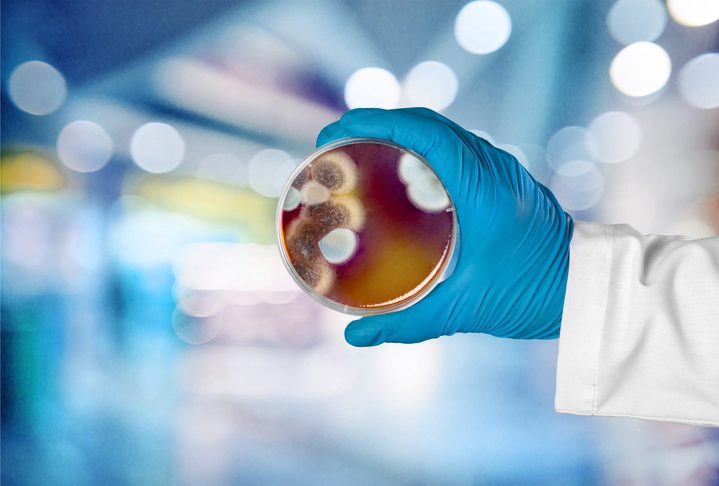
As part of a unique initiative funded by UK Research and Innovation (UKRI) and delivered by iiCON, companies and research groups with novel solutions to tackle infection transmission were offered the opportunity to shape the direction of the UK’s infection response and bid for funding.
After successful sandpit events, iiCON announced 11 new projects had received a share of £1.5 million in funding from UKRI as part of its ongoing work to support innovative ways of tackling infections.
Here, we explore how spin-out CCI Photonics has utilised their funding to validate a novel in vitro diagnostic device the company has developed.
Challenge:
Antimicrobial resistance (AMR) is a compelling global healthcare crisis with estimated economic costs of over 1 trillion $ by 2050 (Poudel 2023) and the UK is not exempt with 12,000 lives lost annually (Antibiotic Research UK). Current diagnostic methods to identify bacterial infections in patients take up to 72 hours for results, meaning many patients are prescribed antibiotics based on “best guess” treatments, leading to ineffective care, increased likelihood of recurrence and contributing to the rise of AMR.
Response:
To tackle this issue, CCI Photonics has developed InfectiScan, a revolutionary in-vitro diagnostic device that combines infrared spectrometry with cutting edge AI models.
This device can detect bacterial infections in bodily fluids within just 15 minutes informing the healthcare worker what bacteria are present and what antibiotics should be prescribed. Its initial prototype proof-of-concept tests have shown remarkable accuracy, with the ability to identify and differentiate bacteria with up to 94% accuracy.
With the UKRI Novel Technologies Grant, CCI Photonics in collaboration with Liverpool School of Tropical Medicine (LSTM) and University Hospitals of Morecambe Bay NHS Trust (UHMB) performed a pilot study aiming to evaluate and validate the prototype’s ability to quickly identify urinary tract and bloodstream infections, including those resistant to antibiotics.
Successful validation will support the widespread use of the prototype in healthcare settings, such as GP surgeries, and community pharmacies, improving patient care and outcomes as well as helping to reduce AMR.
The validation project saw the team validate their test across 739 biological samples including microbiological isolates, and clinical samples. The samples were tested in both the InfectiScan device and an FTIR spectrometer (Fourier Transform Infrared Spectrometer) using complex data analysis.
Results were highly encouraging and also validated InfectiScan’s performance with samples from different laboratory environments.
InfectiScan’s ability to distinguish between E. coli with and without carbapenem resistance was also tested on a small number of samples. Despite a low number of samples, InfectiScan successfully captured the data necessary to accurately differentiate carbapenem-resistant organisms. This work was submitted for the ESCMID 2026 conference.
The team has also built, trained and tested a classifier system on hundreds of clinical urine samples from Morecambe Bay Hospitals, a third with urosepsis from different bacteria. Infectiscan was able to differentiate urosepsis urine samples from clean samples with near 80% accuracy. Following these encouraging results, the team will be working to explore the complexity of the samples and improve the results further.
Next steps:
Going forward, the CCI Photonics team will be developing future R&D work to improve and refine the antibiotic profile detection with its machine learning methods. They will also continue to gather clinical samples from a different city and study all the co-founding factors that urine has. This to help them to refine their UTI test using real-world data.